still matter. Compare concepts

An ethic of deliberate stewardship

A longer view
of what remains.

Suffering matters, wherever it occurs. That conviction shapes our approach to what remains: long-duration containment, deep-space departure, and solar delivery.

Explore the concepts

Three concepts. Two scopes. A commitment to thinking beyond ourselves.

The future of matter deserves intention.Read the thinking

01 — The starting point

Our fundamental
argument.

Four premises.
One precautionary conclusion.

  1. Starting view

    Wild suffering can outweigh enjoyment.

    Our starting view is that many wild lives contain more suffering than enjoyment. The interests of those animals deserve moral weight.

  2. Hypothesis

    Consciousness may be linked to matter.

    The thought experiment adds a speculative premise: future experience could depend on the reuse of a person’s matter.

  3. Ethical principle

    Unnecessary suffering should be avoided.

    We believe humans should avoid causing unnecessary suffering, wherever it occurs and whoever experiences it.

  4. Ethical judgement

    Being natural does not make suffering necessary.

    We reject the idea that wild animals’ pain becomes necessary or good simply because it occurs in nature.

Our conditional conclusion

Investigate longer separation
from Earth’s biosphere.

Under that hypothesis, our proposal is to explore keeping human remains out of Earth’s ecological cycles for as long as practicable, provided doing so does not create greater harm.

Explore the three approaches

02 — Three directions

One question.
Three different horizons.

Three approaches to the future of human remains. Compare each destination, separation timescale, and estimated budget, with whole-body and brain-only scope.

Explore a scopeApplies to all three concepts

Whole body considers the remains together, with an enclosure or mission sized for the complete body.

01 / EarthboundContainment concept
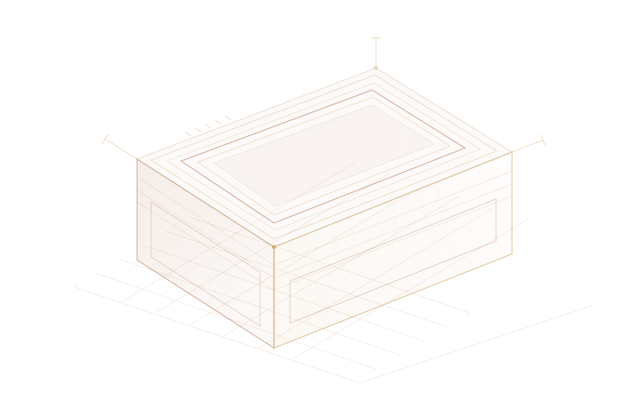
Nested layers of an abstract containment vessel

Long-duration
containment

A material boundary. A longer interval.

A layered enclosure for whole-body remains, designed around one objective: delaying exchange with the surrounding biosphere.

Estimated separation from Earth’s biosphere1,000-year design targetIllustrative target · service life not validated
Illustrative budget · USD$75k–250kPer containment placement
IntentDelay exchange

Layered enclosure · protected placement · a dedicated stewardship reserve.

02 / OutboundMission concept
A small capsule following a trajectory away from a planet

Deep-space
departure

Distance on an astronomical scale.

An outbound mission concept for whole-body remains, with physical separation from Earth’s biosphere as its destination.

Estimated separation from Earth’s biospherePotentially millions of yearsAfter successful Solar-System escape
Illustrative budget · USD$100m–500mOne dedicated mission program
IntentPhysical separation

Payload integration · outbound spacecraft · launch and mission operations.

03 / SunwardMission concept
An abstract Sun with concentric rays and a sunward trajectory

Solar
delivery

A destination on a stellar scale.

A solar-delivery mission concept for whole-body remains, transferring material from Earth to a stellar environment.

Estimated separation from Earth’s biosphereNo reliable duration estimateThe Sun circulates and ejects material
Illustrative budget · USD$500m–2bnOne dedicated mission program
IntentStellar transfer

Solar mission design · specialist spacecraft · launch and operations.

Timescales refer to Earth’s external ecological cycles after successful placement or delivery. Space budgets cover a dedicated mission program. Read the estimate assumptions ↓

03 — Side by side

Choose the scope.
Consider the scale.

Currently viewingWhole bodyChange scope ↑
Comparison of the three post-mortem matter stewardship concepts
Consideration01 Containment02 Deep space03 Solar delivery
Where material goesWithin an enclosure on EarthOn an outbound trajectoryInto a dynamic stellar environment
Proposed scopeWhole-body remainsWhole-body remainsWhole-body remains
Estimated separation from Earth’s biosphere1,000-year design targetIllustrative target · service life not validatedPotentially millions of yearsAfter successful Solar-System escapeNo reliable duration estimateThe Sun circulates and ejects material
What separation depends onBarrier integrity and long-term stewardshipMission success and the future trajectoryDelivery and the Sun’s movement of matter
Planning focusDurability and stewardshipDistance and trajectorySunward delivery
Main cost driversCustom enclosure, placement, and reserve fundingSpacecraft, launch, and mission operationsMission complexity, spacecraft, and launch
Illustrative budget · USD$75k–250k$100m–500m$500m–2bn

Compare budgets on the same basis: one containment placement or one dedicated space mission. Cost assumptions appear below.

04 — What we stand for

Less indifference.
More care.
A longer view.

The scale of a life does not determine the importance of its suffering.

I.

Suffering deserves priority

We believe the prevention of suffering is an ethical obligation. Species, size, and distance from our daily lives do not make another being’s pain less important.

II.

Matter deserves deliberate stewardship

Human remains have a physical future. Our approach makes that future an explicit design question: where material goes, how it is held, and who takes responsibility for it.

III.

Responsibility includes the living

Care for the future begins with care in the present. Environmental costs, resource use, consent, and the people who remain belong at the centre of every proposal.

05 — The practical questions

Think it
through.

Scope, destination, and the resources each approach requires.

How do the three approaches differ?

Containment keeps remains on Earth behind a designed material barrier. Deep-space departure centres on an outbound trajectory. Solar delivery centres on transfer to the Sun. The distinction is physical: a boundary, a journey away, or a stellar destination.

What changes with the brain-only option?

The proposed scope becomes smaller. For containment, that changes the enclosure and placement allowance. For a space mission, the payload changes, but much of the spacecraft, launch, and operations budget remains. Other bodily remains sit outside the brain-only proposal and require separate arrangements.

What is included in containment pricing?

The model combines a custom enclosure, specialist design and handling allowances, placement, and an initial stewardship reserve. The reserve is a capital allocation, not an annual subscription. The detailed cost build-up is listed in the estimate notes below.

Why are the space budgets so much larger?

These estimates concern a dedicated mission carrying the selected remains. A launch slot is only one cost: spacecraft development, integration, testing, operations, and contingency also contribute. Prices for sending grams of ashes or DNA are not prices for transporting a whole body or brain.

Why does solar delivery have its own budget?

Reaching the Sun involves a different mission design from leaving Earth. A payload inherits Earth’s sideways orbital motion, which makes solar delivery technically demanding. The estimate therefore gives solar missions a separate spacecraft and engineering allowance.

How should I read the estimates?

All figures are in US dollars. Containment is estimated per placement; the space options are whole-program budgets for one dedicated mission. Switch between whole body and brain only to see how scope affects the model, then review the assumptions and references at the bottom of the page.

Read estimate notes ↓

Take suffering seriously.
Think beyond the familiar.

Revisit the concepts

Estimated separation from Earth’s biosphere
Illustrative budget · USD

Concept budget in USD, not a vendor quote. No service or consciousness-related benefit is established. Scientific limits and cost assumptions are collected in the page footer.